
The Ancient Origins of Livestock Branding: A 4,800-Year History
- Category: Branding
- Date 23-09-2025
The history of livestock identification stretches back at least 4,800 years, and likely even further. When the earliest cities emerged in Mesopotamia nearly 10,000 years ago—in the area that now includes Turkey, Iran, Iraq, Kuwait, and Syria—organized agriculture developed alongside them. With farming came animal husbandry, and with herds of livestock roaming freely across open land, ownership disputes naturally arose.
Even in ancient times, domesticated animals such as cattle and oxen often grazed without strict boundaries. When herds mixed, it became difficult to determine which animals belonged to whom. As a result, early societies needed a reliable system to distinguish one person’s livestock from another’s.
Evidence of such identification systems can be traced in the 3,800-year-old Code of Hammurabi, one of humanity’s earliest legal documents. Archaeological findings from Egypt also reveal that herders marked their cattle, sometimes by carving symbols directly into their horns.
However, the most widespread method—one that has endured through millennia—was hot-iron branding, from which the modern term “branding” originates.
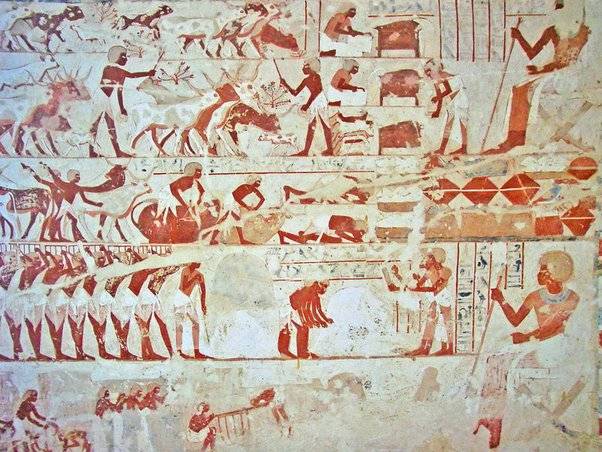
A striking example appears in a 4,000-year-old tomb mural from ancient Thebes (modern Luxor). The artwork shows cattle being restrained on the ground while herdsmen apply heated irons, a scene not unlike those seen in classic Western films. The hieroglyphic inscription below the mural reads:
“Bringing all good things by these herdsmen to the royal scribe, deputy herald, Userhat.”
What did early brand symbols look like?
Early branding marks likely began as simple geometric shapes, but over time evolved into more intricate symbols. In ancient Egypt, branding icons included:
-
Hieroglyphic characters
-
Geometric patterns
-
Depictions of gods
-
Stylized animals
Branding was later adopted by the Greeks and Romans, who sometimes used symbols believed to offer magical protection to the herd. Despite cultural variations, the technique of marking animals remained remarkably consistent from antiquity through the Middle Ages—and still survives today.
One surviving example is an Egyptian branding iron shaped like a duck, bearing resemblance to the Eye of Horus, though its design represents the bird itself rather than the famous symbol.

Branding quickly found new applications in other areas of commerce including the slave and spice trades. But one of the biggest and most interesting applications that led to the usage we associate with branding today was that of the blacksmith. Their symbols mark craftsmanship and authenticity of a specific maker. Knives and swords were among the first products to have value established by the mark of the maker and the best brand products were an indication of social status and appreciated in value over time. You can find many examples of a branded blade from ancient Norse history like the one below.
